Pages

Boost muscle building by 25% if you balance your protein intake at each meal

reade more... Résuméabuiyad

How Intestinal Bacteria Can Be Secretly Making You Fat | Straight Facts


Jerry Brainum discusses the effects intestinal bacteria can have on weight loss,specifically fat loss
Great to have this info available!
reade more... Résuméabuiyad

Do You Need To Do Squats To Get Big Legs? | Straight Facts


Jerry Brainum discusses building big quads with barbell squats. He gives the pros and cons of their use and different variations of this exercise.

reade more... Résuméabuiyad

Creatine supplementation boosts muscle glycogen synthesis 82% higher than placebo after exercise

A large body of evidence over the last two decades has shown that creatine supplementation improves strength and muscle gains. While the primary function of creatine is to provide more efficient fueling of high-intensity exercise, there remains interest in identifying other beneficial metabolic effects.

One intriguing finding in previous studies was the observation that muscle glycogen was higher in subjects supplemented with creatine. Researchers from the United Kingdom recently studied this phenomenon in greater detail.

They had a group of healthy men perform an exhaustive bout of cycling to decrease muscle glycogen. For 6 days after exercise they consumed a standardized high-carbohydrate diet. During the 6 days of recovery, half the subjects started a creatine-loading regimen consisting of 20 grams of creatine monohydrate per day. The other group of subjects received a placebo. Muscle biopsies to determine creatine and glycogen levels were performed immediately after exercise, and after 1, 3 and 6 days.

As expected there were no changes in muscle creatine content with placebo, but creatine supplementation increased total muscle creatine on day 1, 3 and 6 by a total of 9%, 14% and 24%, respectively. The exercise bout caused a significant depletion of muscle glycogen, that then increased markedly during the first 24 hours of recovery in both groups. The rate of glycogen synthesis during this first day of recovery was an astounding 82% higher in the creatine group. Thereafter, muscle glycogen continued to increase at a similar rate at day 3 and day 6 such that muscle glycogen remained higher in the creatine group.

The researchers performed several other measures to determine how creatine might be augmenting muscle glycogen but were unable to attribute the creatine-induced glycogen enhancement to any known mechanism. These findings confirm in a very well-controlled experiment that creatine supplementation in combination with a high-carbohydrate diet augments muscle glycogen levels. For athletes consuming a high-carbohydrate diet, it seems prudent to incorporate creatine supplementation to not only enhance performance, but also metabolic recovery.

Dr. Jeff Volek is a registered dietitian and Full Professor in the Department of Human Sciences at The Ohio State University. He has published 270 articles examining health and performance effects of low-carbohydrate diets and other dietary supplements including seminal work on creatine, carnitine and whey protein. 
reade more... Résuméabuiyad

Magnesium And Dangers Of Cutting Water Weight Before Competitions | Straight Facts


Jerry Brainum discusses the benefits of magnesium for bodybuilders and dangers of too aggressive cutting of water prior to a contest.

reade more... Résuméabuiyad

Extra protein before bedtime can boost muscle building

Two proven ways to boost Muscle Protein Synthesis (MPS) are to eat protein and to exercise (especially weight training). After reviewing the results of multiple studies, researchers commented that 20g of high quality protein per meal (with a maximum of 4-5 hours between each meal) is the best way to maximize MPS during the day. More protein may be needed for those with more muscle, those who are older or those who do full body workouts. 
This frequent protein timing pattern has been relatively well documented, and researchers wanted to determine the effect of ingesting protein over longer periods of time because the adaptive response to weight training lasts more than a few hours. If you consume protein every 4 hours during the day but have a big gap at night while you sleep, are you truly maximizing your muscle gains to the fullest extent? That’s what these researchers set out to determine. (Figure A)

The researchers hypothesized that taking protein right before sleep would boost MPS throughout the night. To test this theory, they had recreational athletes drink 20g of protein as a recovery drink immediately after their typical afternoon exercise. This was to prove that protein intake after a late afternoon workout does not diminish the benefits of more protein right before sleep. Next, the athletes were split into two groups and took either 40g of protein (from casein) or placebo right before going to sleep.

As expected, the casein group not only increased MPS 22% higher than placebo, but they also improved whole-body protein balance throughout the night. (Figure B)

They repeated this test in a later study, but with 10g less protein (30g of pre-sleep protein). Surprisingly, the changes were much smaller than what they observed in their previous study. The researchers commented that due to the long period of time (8 hrs) spent sleeping compared to the typical time between meals (4-5 hrs), larger amounts of protein (40g or greater) are required to produce a robust stimulation of MPS during overnight sleep.


Their advice to maximize MPS is as follows. Aim to ingest enough protein at every meal to maximize MPS until your next meal. Just because you eat a large amount of protein at one meal, does not mean you can skip protein the next meal. Each meal is a unique opportunity to stimulate MPS, and these responses may be additive. Take 40g protein before bed if you are doing resistance-type exercise (weight training) and are looking to maximize your muscle building potential by improving the adaptive response to exercise training. 

reade more... Résuméabuiyad

Insulin Facts and Fiction By Jerry Brainum


In this video Jerry explains some of the misconceptions and truths surrounding the use of insulin as a bodybuilding drug.


reade more... Résuméabuiyad

Enzyme therapy improved recovery

Muscles damaged by exercise can become sore and painful later, slowing training and reducing performance. In this study, 72 male athletes, age 20 to 50, took Wobenzym—a combination of bromelain, papain, pancreatin, and trypsin—or a placebo 72 hours before and 72 hours after a day of exhausting quadriceps exercises designed to damage muscle. Some of the men were less resistance-trained, others were endurance trained. Compared to placebo, the less resistance-trained men who took the enzyme were able to maintain strength and had less pain after exercise. The endurance athletes had less inflammation, and signs of beneficial effects on metabolic and immune function.


reade more... Résuméabuiyad

Cranberry aided exercise recovery

In this study, 16 members of the Polish Rowing Team took a placebo or 1,200 mg of cranberry extract for six weeks. The team performed a strenuous 1.24-mile rowing test before and two weeks after taking the supplements. After the second test, several types of inflammation had increased only for placebo, including signs of systemic inflammation, muscle cell damage, and excess levels of a hormone in the liver that can interfere with iron stores in the blood. Doctors also measured antioxidant levels and found those taking cranberry extract had significantly higher total antioxidant capacity at rest, after exercise, and after recovery. Taking cranberry extract before strenuous exercise can boost total antioxidant capacity, help control inflammation, and reduce oxidative stress during and after recovery. 


Reference: Journal of the International Society of Sports Nutrition; 2017, 14:7. 
reade more... Résuméabuiyad

The First Name In Strength & Arthur Jones

Those who are familiar with the fitness industry will recognize the name Nautilus. This can be accredited to Arthur Jones, the founder of Nautilus, who changed the fitness landscape in the 1970s with his cutting edge product development, workout structure and marketing tactics. His innovations in the construction and use of fitness equipment would propel strength machines and circuit style training forward into the massive industry it is today.
Detailed in the book, Legends of Fitness by Stephen Tharrett, Frank O’Rourke & James A. Peterson, the authors recognize the achievements of Nautilus and the impact Arthur Jones had on the fitness industry.
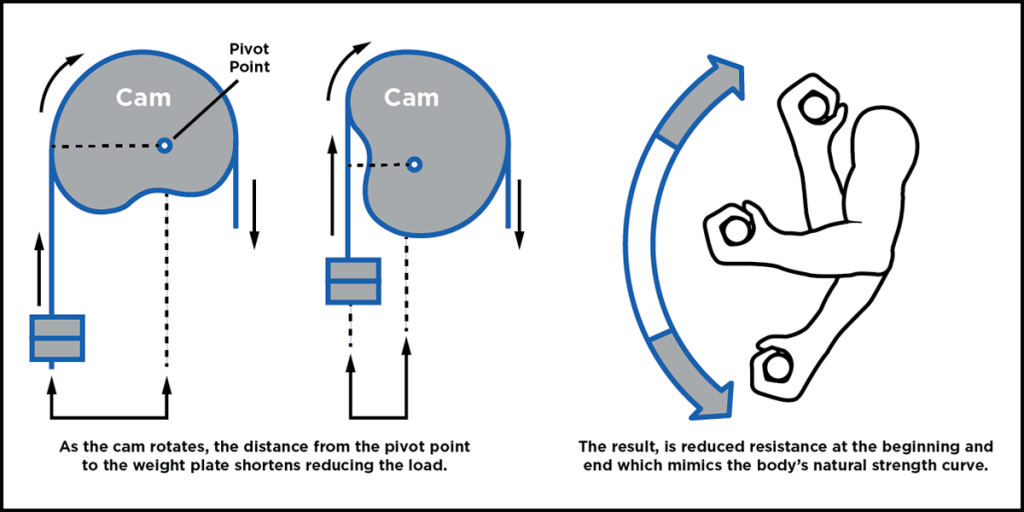
Introduced to the world in 1970, Nautilus machines were significantly different than anything else on the market before them. (Tharrett et al. 2011). One particular unique feature of these exercise machines was the Nautilus CAM, a specially designed pulley mechanism that was shaped like a nautilus shell (hence the name Nautilus).
The Nautilus CAM was so innovative to strength machines because it changes the way resistance is applied. When a cable with weights is pulled over a round pulley, the resistance is consistent, but when a nautilus shaped or oval CAM is used, the resistance is varied. This is due to the distance between the cable and the CAM’s pivot point changing as the CAM rotates. The load is lighter at the beginning and end of the motion with the full resistance in the middle. The variable resistance follows the body’s natural strength curve and makes for a much better workout.
In addition to the CAM, Nautilus’ efforts to design and manufacture individual training machines for various body parts also had a significant impact on the industry. (Tharrett et al. 2011). This series of machines enabled exercisers to train the body’s muscle groups-one machine and one particular body area (circuit-style) at a time. The Nautilus machines offered an effective and efficient way for individuals to engage in resistance training. The combination of the CAM and the dedicated machines for each body part drove an entire segment of the health/fitness facility industry in the 1970s.
In addition to revolutionizing the way fitness equipment was developed, Nautilus was also one of the first companies to recruit athletes and celebrities to promote their equipment through marketing. Their successful marketing and revolutionary products pushed Nautilus to the forefront of the fitness industry.
Nautilus Sports/Medical Products Company became the largest manufacturer of fitness equipment in the world, achieving annual sales of close to $75 to $80 million (equivalent to $250 to $270 million in 2011) at its pinnacle in the late 1970s. (Tharrett et al. 2011).
It is easy to see how the early Nautilus machines became the blue print for strength equipment today. However, according to the authors of Legends of Fitness, the machines may not even be the most impactful achievement of Arthur Jones.
Truth be known, Jones’ most significant contribution to the world of fitness may not have been the Nautilus equipment that he introduced in 1970. (Tharrett et al. 2011). Rather, Jones’ most lasting influence may well be the core principles of training that he developed and advocated, including performing one set of exercises to exhaustion, undertaking super slow controlled concentric and eccentric training, and engaging in 20-minute workout circuits.
When asked, Co-Author & Fitness expert Frank O’Rourke expanded on the content of the book explaining, “Arthur Jones was the genesis of the fitness equipment industry. He revolutionized strength training by inventing the “Thinking Man’s Barbell” and popularizing Strength CAM Technology, he created an industry with the concept of Nautilus fitness centers around the globe. High intensity interval training (HIIT) was his original idea of making Bigger, Faster and Stronger athletes which carried on to the general public. HIIT continues to be a main stay for fitness enthusiasts over the years due to the effectiveness and short duration of the workouts. Arthur is a legend in our industry as an inventor and was the catalyst of what all fitness companies are today!”
Nautilus invented the entire modern strength training category more than 40 years ago, and we’ve been reinventing it ever since. We continue to honor Arthur’s legacy by innovating equipment to provide a fitness experience that naturally fits human movement. Arthur Jones’ legacy set the groundwork for the larger strength industry we have today. At Core Health & Fitness we are honored to continue on the Nautilus name and to be a part of the revolution that changed the fitness industry and the first name in strength.
reade more... Résuméabuiyad

HIT Back Training

                             Image result for back muscles


Try the following HIT workout to build new muscle and strength in your back. Since the back is a very large,complex muscle group it is necessary to use a variety of exercises to thoroughly train the entire region. 

Use rowing exercises to thicken the rhomboids, pull-down movements to build the lats, high pulls to thicken the traps and seated back extensions to strengthen the lower back.


  • Low cable rows-1x8-static holds at mid-point -10-seconds each-5-second rest between holds
  • Machine pull-downs-1x10-partials-5 reps bottom half-5 reps top half
  • Cable good mornings-1x10


All sets need to be taken to failure with maximum weights possible. Use good form throughout with no momentum to keep the resistance on the muscle.

reade more... Résuméabuiyad

Why eggs are a must-eat for bodybuilders


No one has ever doubted that eggs are nutritional powerhouses, and for this fact alone eggs are a must-eat for bodybuilders. It is widely agreed that because of the variety of amino acids in eggs, they are nature’s most perfect protein source. The protein that eggs contain is almost 100% digestible and usable by the body. For a hungry bodybuilder needing to take in a considerable amount of protein, eggs offer another benefit — they are inexpensive compared to other major protein sources such as meat and fish.
Not so many years ago, eggs topped the list of “don’t go there” foods because of their high level of dietary cholesterol. The American Heart Association (AHA) even put a cap on the number of egg yolks that should be consumed per week:  no more than four. That’s no longer the case, as the AHA changed its guidelines, based on heart-disease studies; they now de-emphasize placing a limit on eggs in favor of restricting total daily cholesterol intake. So, if you have normal cholesterol, consuming eggs on a regular basis should be OK. Keep in mind that cholesterol  could become a problem if you eat egg yolks as well as trans fats, saturated fats and other high cholesterol foods, which, as a bodybuilder, you should not be doing! However, if you are eating a varied diet rich in vegetables, fruits,  whole grains and lean meats, then consuming eggs regularly shouldn’t be a problem


reade more... Résuméabuiyad

The 6 Biggest Leg-Press Mistakes Solved!


r


Don't think you can't mess up your form on machines? Here are some important reminders of what can go wrong.
You'd think the leg press would be idiot-proof. But nope! Like anything else in the weight room, there are any number of ways you can mess it up.
Because you don't have to balance the load as you do with squats, the leg press allows you to focus on simply moving the weight from point A to point B. That enables you to go somewhat heavier than you'd normally be able to do with a free-weight move. Heavy weights combined with bad form can be a recipe for injury. 
What can go wrong? Let's take a look at six common mistakes you can make on this solid leg movement.

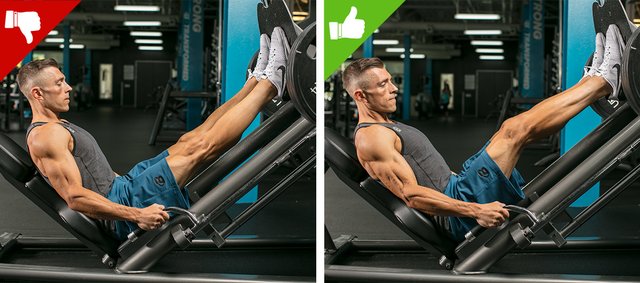
1. Lowering The Sled Too Far

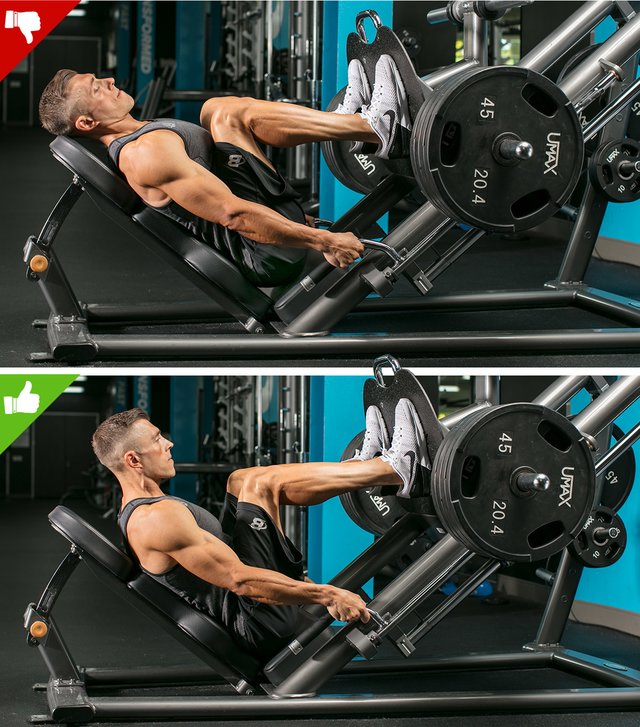
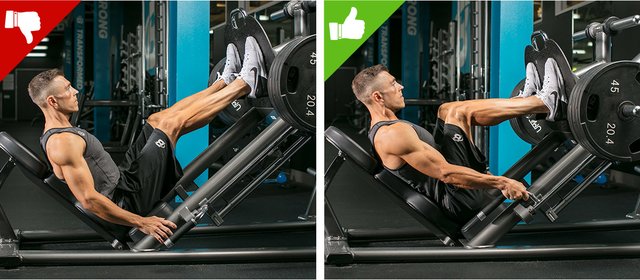
One of the advantages of leg presses over squats is that the machine supports your back. But while it's next to impossible to get the thoracic spine off the pad, your lumbar is still vulnerable. When you allow the sled to come down too far, it lifts your butt and even the lower region of your back off the pad. That's when your lumbar disks are most at risk, especially if you aren't in total control of the sled.
The 6 Biggest Leg Press Mistakes Solved: Lowering The Sled Too Far
Control the negative at all times, lowering the sled to a point just before your glutes lift off the seat. You may need a spotter's trained eye viewing from the side; then establish—and practice— this as the end of your range of motion. 
Remember, just because you can take the movement even lower doesn't mean you should.

2. Doing Only Shallow Reps

Yes, the depth critique goes both ways! If you haven't heard the refrain "partial reps equal partial results," you'd best memorize it. Anyone can load an impossible amount of weight on a bar or machine, but if you move it only an inch or so—like I've see all too many people do—you're getting next to zero benefit. 
The 6 Biggest Leg Press Mistakes Solved: Doing Only Shallow Reps
So-called partial reps don't target all the muscle fibers of the legs by a long shot. You're simply not working the muscle adequately if you're doing only quarter-reps or even half-reps.
Going a little deeper engages the glutes and hams to a greater degree than staying shallow, especially on the negative. Try to lower the weight to a point at which your thighs are about parallel with the foot sled; your knees should be bent about 90 degrees.

3. Not Having Your Heels On The Sled

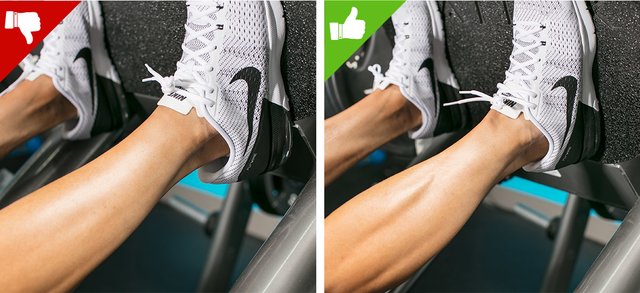
Not every foot plate has a large surface area; when you're stuck using a unit with a small one, you may be tempted when trying to emphasize the quads to push your heels off the lower edge of the platform. You definitely shouldn't.
The 6 Biggest Leg Press Mistakes Solved: Not Having Your Heels On The Sled
"Your base of support becomes much smaller when your heels lift off, leaving you unbalanced and reducing your ability to perform a controlled rep," says Ciaran Fairman, MS, CISSN, a doctorate student in kinesiology at The Ohio State University. "Second, you have much less force production than if you were to have your full foot in contact, which also allows you to drive through your heels. Finally, lifting the heels will increase shear forces on the knee. Essentially, you won't be able to lift as much, you won't have as much control over the weight, and you'll be putting more pressure on your knees than necessary." [1]
The problem is similar for individuals whose heels come up off the footplate at the bottom of the negative rep. Those folks should address ankle mobility and reposition their feet so that they have the entire foot in contact with the sled at all points of the range of motion.

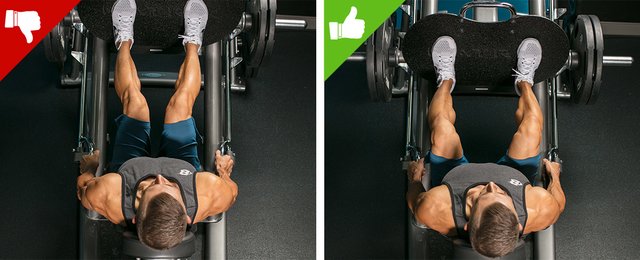
4. Allowing Your Knees To Collapse Inward

This is typically more common in women, says Fairman.[2,3] "It increases your risk of injury, most often via anterior cruciate ligament (ACL) tears. This often arises because of weak hip abductors, and the gluteus medius in particular. Knee valgus should be taken seriously and addressed immediately."
The 6 Biggest Leg Press Mistakes Solved: Allowing Your Knees To Collapse Inward
Here are some tips from Fairman to avoid valgus during leg presses (or squats): 
  • Do banded movements often, or even wear one on the press. Placing a band around the top of the knee creates tension, which helps people be cued to drive their knees outward during the movement. 
  • Work on strengthening the posterior chain, paying particular attention to the gluteus medius. Good exercises include deadlifts, Romanian deadlifts, single-leg Romanians, and lunges. 
  • Jump on the hip-abductor machine (the one in which you push your legs outward) to activate and strengthen the gluteus medius. 

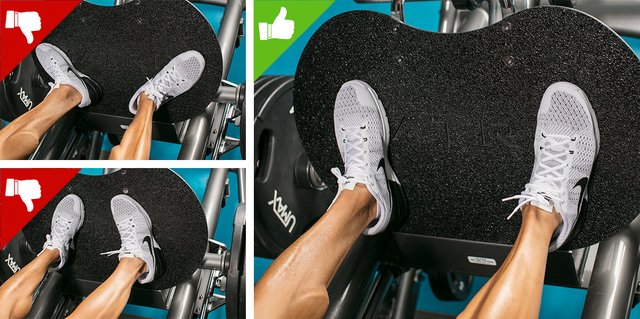
5. Turning Your Feet Excessively Inward Or Outward

You've probably heard that turning your feet inward or outward on leg extensions and leg curls can help you direct the stimulus to emphasize the quads or hamstrings, respectively. That's true, but what's good on one machine isn't always good on another. 
The leg extension and curl are open-chain exercises, meaning your feet aren't planted against a solid surface. But when you're doing the leg press, which is a closed-chain movement where your feet are planted, turning your feet excessively can create pressure that will be absorbed by the knees. For most people, the best position to start with is going to be feet shoulder-width apart and turned slightly outward, making only minor adjustments in foot position. 
The 6 Biggestt Leg Press Mistakes Solved: Turning Your Feet Excessively In or Outward
Of course, there are ways you can still use foot position to shift the focus from one area of the thighs to another. A low foot position more effectively focuses on the quads, because there's less hip extension and greater knee flexion, while a high foot position better hits the glutes and hamstrings with more hip extension and less knee flexion.
Wider stances, which are a favorite of long-limbed lifters, work the inner thighs and glutes more strongly; conversely, a closer stance better targets the outer thighs. 

6. Locking Out Your Knees

While you're always encouraged to take each rep close to full extension, there's a fine line between extension and lockout. That's an important point, because it's where the stress heavily shifts from the muscle and onto the joint, and that pressure can be enormous when you're using heavy weights. 
The 6 Biggest Les Press Mistakes Solved: Locking Out Your Knees
When you're locked out, you're most likely catching your breath between reps or resetting your focus. But it's also giving your muscles a break from the tension. So it's both bad for knees and counterproductive to your muscle-building goals.
Try to go to a point just shy of full extension; if you're got pre-existing knee issues, stop about 10 degrees short of lockout, so the bones don't have maximum surface contact.
References
  1. Lewis, C. L., & Sahrmann, S. A. (2006). Acetabular labral tears. Physical Therapy, 86(1), 110-121.
  2. Quatman, C. E., & Hewett, T. E. (2009). The anterior cruciate ligament injury controversy: is "valgus collapse" a sex-specific mechanism? British Journal of Sports Medicine, 43(5), 328-335.
  3. Ford, K. R., Myer, G. D., & Hewett, T. E. (2003). Valgus knee motion during landing in high school female and male basketball players. Medicine and Science in Sports and Exercise, 35(10), 1745-1750.
reade more... Résuméabuiyad

The 11 best supplements for building muscle mass


W
WITHOUT A DOUBT, you can add muscle simply by eating right and lifting weights. But to truly maximize your growth potential, supplements are a popular option. The only question: Which ones to choose?
That's why we've compiled 11 of the best mass-gain supplements worth your hard-earned cash. They're listed in order of priority, from the absolute most critical, can't-do-without supplements to the optional (yet still highly effective) ingredients for packing on size. The point is to help those on a tight budget decide which supplements to buy. And hey, if money is no object, then by all means stock up—just be sure you're using these as directed.

Priority #1: Whey protein powder

Why it made the list: Whey tops the list of mass-gain supplements because it's the most crucial for pushing protein synthesis. Whey is a milk protein that has a high level of branched-chain amino acids (BCAAs, No. 4 on our list). Bottom line: Whey takes the crown because it digests fast and gets to your muscles rapidly to start building muscle. Whey also contains peptides (small proteins) that increase blood flow to the muscles. This is why we always recommend consuming whey protein immediately after training.
How to maximize its effects: Take 20 grams of whey protein powder in the 30 minutes before working out, and take 40 grams within 60 minutes after training. Also consider taking 20-40 grams of whey immediately upon waking every morning to kick-start muscle growth. Your best bet is to choose a whey powder that contains whey protein hydrolysates (whey protein broken down into smaller fragments for faster digestion) or whey protein isolate.

Priority #2: Casein protein powder

Why it made the list: The other milk protein, casein, squeaks in just under whey. Casein has always played second fiddle due to its very slow digestion rate—yet this makes it ideal as a pre-bedtime snack because it prevents catabolism while you sleep by emptying slowly and steadily. Casein also makes you feel less full, which makes it a great snack for those who want to pack on muscle mass. And new research finds that casein gives whey a run for its money. When casein is taken post-workout, it boosts muscle protein synthesis much like whey does. It's even suggested that a whey and casein protein shake taken after training increases muscle growth better than either protein taken alone.
How to maximize its effects: Choose a casein protein that contains micellar casein (the slowest-digesting casein you can buy) and take 20-40 grams right before going to bed. After workouts, add 10-20 grams of casein to your whey protein. Also, use 20-40 grams of casein in your protein shakes between meals.

Priority #3: Creatine

Why it made the list: Creatine is made from three amino acids: arginine, glycine and methionine. Anecdotal reports and scientific studies alike find that guys who take creatine gain a good 10 pounds or more of bodyweight and increase strength dramatically. Creatine works in a number of ways. For one, it increases the amount of fast energy in your muscles needed to perform reps in the gym. The more of this fast energy that's available, the more reps you can do with a given weight, allowing you to get bigger and stronger in the long run. Creatine also draws more water into your muscle cells, placing a stretch on the cell that increases long-term growth. Most recently, creatine has been found to increase levels of insulin like growth factor-1 (IGF-1) in muscles, which is critical for stimulating growth.
How to maximize its effects: Take 2-5 grams of creatine in the form of creatine monohydrate, creatine malate, creatine ethyl ester or creatine alpha-ketoglutarate with your protein shake immediately before workouts. This will help keep your muscles saturated with creatine, producing the rapid energy they need to perform more reps. Then consume another 2-5 grams with your postworkout shake (in addition to 40-100 grams of fast-digesting carbs), a time when creatine will be rapidly taken up by muscle cells and the boost in IGF-1 levels will help prompt further growth. On days when you don't train, take 2-5 grams of creatine with a breakfast that contains carbohydrates.

Priority #4: Branched-chain amino acids (BCAAs)

Why they made the list: The term branched-chain amino acids refers to leucine, isoleucine and valine, the absolute most important amino acids for repairing and building muscle tissue. Leucine is the most critical of the three, as research shows that it can stimulate muscle protein synthesis on its own. Yet it's still best to take all three together, since they work in synergy to provide a multitude of benefits, including muscle growth, increased energy during workouts, the blunting of cortisol (a catabolic hormone that inhibits testosterone and increases muscle breakdown), and decreased delayed-onset muscle soreness. 
How to maximize their effects: Take 5-10 grams of BCAAs with breakfast, as well as in your pre- and post-workout shakes. Look for BCAA products that provide leucine at a ratio of 2:1 per dose of isoleucine and valine. For example, if you take a 5-gram dose of BCAAs, about 2.5 grams should be from leucine, 1.25 grams from isoleucine and 1.25 grams from valine.

Priority #5: Beta-Alanine/carnosine

Why they made the list: In the body, the amino acid beta-alanine is combined with another amino, histidine, to form carnosine. Research shows that when muscles have higher levels of carnosine, they have more strength and endurance. Carnosine appears to increase the muscle fibers' ability to contract with more force, and to do so longer without fatiguing. Several studies reported increases in muscle strength and power in athletes who took beta-alanine. One recent study found that subjects who took beta-alanine along with creatine gained more muscle mass and lost more bodyfat than subjects who took only creatine.
How to maximize their effects: Take 1-2 grams of beta-alanine or carnosine immediately before and after every workout in addition to your shakes and creatine. On nonworkout days, take 2 grams with breakfast, along with creatine.

Priority #6: Nitric oxide boosters

Why they made the list: Nitric oxide (NO) is a molecule, found throughout the body, that's involved in multiple processes. Bodybuilders are most interested in NO's ability to dilate blood vessels, which allows more blood flow to the muscles for enhanced delivery of oxygen, nutrients, anabolic hormones and water (blood is mostly water, after all). This gives you more energy during your workout, an enhanced muscle pump, and better muscle recovery and growth after the workout. NO boosters don't provide NO directly, but rather deliver it in the form of the amino acid arginine, which is readily converted to NO in the body. Research has found that subjects who were given arginine increased muscle strength and growth and lost bodyfat.
How to maximize their effects: Take an NO booster that provides 3-5 grams of arginine in the form of L-arginine, arginine alpha-ketoglutarate, arginine ethyl ester or arginine malate. Also, consider NO boosters that provide ingredients such as citrulline, pycnog-enol and American ginseng, which enhance arginine's ability to increase NO. Take one dose at each of the following times: in the morning before breakfast, 30-60 minutes before training, immediately after training and 30-60 minutes before bedtime. When possible, take each dose without food and consider combining it with 500-1,000 mg of vitamin C, which can help maintain levels of NO for longer.

Priority #7: Glutamine

Why it made the list: This amino acid has been a favorite of bodybuilders for decades because it's central to muscle function and is one of the most plentiful aminos found in the human body. Glutamine provides numerous bodybuilding benefits, such as aiding muscle growth by increasing levels of leucine in muscle fibers, helping decrease muscle breakdown and bolstering the immune system, which helps prevent you from getting sick and missing workouts. Glutamine taken before workouts can help decrease muscle fatigue and boost growth hormone levels. In addition, recent research shows that glutamine might also play a role in fat loss by increasing the amount of calories and fat burned at rest and during exercise.
How to maximize its effects: Take 5-10 grams of glutamine in the morning with breakfast, with your pre- and post-workout shakes, and with your nighttime snack.

Priority #8: ZMA

Why it made the list: ZMA is a combination of zinc, magnesium aspartate and vitamin B6. It's an important supplement because hard-training athletes such as bodybuilders are often deficient in these critical minerals, which are important for maintaining hormone levels and aiding sleep (essential for recovery). Intense training can compromise levels of testosterone and IGF-1. In fact, one study found that athletes who took ZMA significantly increased their levels of testosterone and IGF-1 during eight weeks of training, while those who took a placebo experienced a drop in both T and IGF-1. Naturally, boosting testosterone and IGF-1 can make huge impacts on muscle gains.
How to maximize its effects: Use a ZMA product that provides about 30 mg of zinc, 450 mg of magnesium and 10.5 mg of vitamin B6, and take it 30-60 minutes before bedtime without any food or calcium. Taking ZMA on an empty stomach will enhance its uptake and utilization and improve your sleep quality for optimal recovery.

Priority #9: Carnitine

Why it made the list: Besides being a popular fat-loss supplement, carnitine is now known to enhance muscle growth through a number of mechanisms, all of which are supported by clinical research. For one, carnitine can increase blood flow to muscles, which means it provides similar benefits to NO boosters. It also increases testosterone levels postworkout and the amount of T receptors inside muscle cells, which allows more testosterone to stimulate more growth. In addition, carnitine supplements have been found to increase levels of IGF-1. Add all these benefits together and you have the potential to gain enormous amounts of muscle.
How to maximize its effects: Take 1-3 grams of carnitine in the form of L-carnitine, acetyl-L-carnitine or L-carnitine-L-tartrate with breakfast, your pre- and postworkout shakes, and nighttime meals.

Priority #10: Beta-ecdysterone

Why it made the list: Beta-ecdysterone is a phytochemical found in plants such as spinach, where its main function is to protect the plant from insects. Russian scientists discovered many years ago that beta-ecdysterone has anabolic properties. In fact, it's similar in structure to hormones found in insects and crustaceans. Yet beta-ecdysterone doesn't behave like a hormone in the body, but rather works by stimulating protein synthesis and therefore muscle growth. Anecdotal reports suggest that it's very effective for producing increases in both muscle size and strength.
How to maximize its effects: To get the most out of beta-ecdysterone, make sure you get a high enough dose and take it frequently throughout the day. Look for products that supply about 100 mg of beta-ecdysterone and take it with meals in the morning, before and after workouts, as well as with lunch and dinner, for a total of 400-500 mg per day.

Priority #11: High molecular-weight carbs

Why they made the list: Molecular weight is a term that refers to the mass of one molecule of a substance. Therefore, high molecular-weight carbs (HMCs) are essentially made up of very large, heavy molecules. HMCs such as the patented Vitargo brand are typically made from waxy maize (corn) starch. What makes these carbs so special is their ability to rapidly pass through the stomach to the intestines where they can be absorbed and enter the blood. Research shows that HMCs pass through the stomach at a rate almost 100% faster than sports drinks. This is important after exercise because consuming carbs at this time blunts cortisol levels, prevents muscle breakdown and raises insulin levels to help promote muscle growth and replenish muscle glycogen levels.
How to maximize their effects: Taking 60-100 grams of HMCs mixed in your postworkout shake will help push muscle recovery and growth, and the insulin spike it causes will drive more amino acids, creatine and carnitine into your muscle cells. In other words, HMCs will not only boost muscle growth themselves but they will help your other mass supplements work even better.
courtesy of Men's Fitness
reade more... Résuméabuiyad

Protein Rules-Tips to get the most out of every scoop of protein powder


BEFORE YOU PURCHASE YOUR NEXT TUB OF PROTEIN, USE THESE TIPS TO GET THE MOST OUT OF EVERY SCOOP
Consuming protein and protein shakes is something you might be doing on autopilot. Bad idea. With the rise of “protein spiking”—when companies cheap out on ingredients and use additives as work-arounds to skew the nitrogen count—it’s crucial to stick with brands that are transparent. Those companies are always trying to satisfy customers because word of mouth among gym-goers is still the most important advertising vehicle around. So when you’re down to your last scoop of protein, keep these tips in mind before you make your next purchase.

CHECK THE INGREDIENTS
If the first ingredient isn’t a form of protein, someone is duping you. Rule 1’s are whey protein isolate and whey protein hydrolysate. There’s no gluten, fillers, or banned substances. But it does contain the BCAAs leucine, isoleucine, and valine—aminos that can help induce protein synthesis and muscle growth.
CONSUME PROTEIN PRE- AND POST-WORKOUT
A study published in the European Association for the Study of Diabetes found that consuming whey before breakfast helped lessen blood sugar spikes, which is good for managing hunger cravings.
EXPERIMENT
In the kitchen, that is. We all need a break from protein shakes, so consider mixing a scoop of Rule 1 with your oatmeal or adding some to whole-wheat pancake batter. For on-the-go snacks, make protein bars or overnight oats. Many recipes are easy and do not involve using an oven or wearing a “Kiss the Cook” apron. – FLEX
reade more... Résuméabuiyad

Figurarts Zero: Sailor Jupiter!


Sailor Jupiter from the Figurarts Zero line was the newest addition to my figurine collection this past Christmas. It was between her and Sailor Venus and my lovely sibling picked this one. 

I love her expression and the detail given to the shading aspect. I put it next to my Mercury from the same line and was quite surprised to see how 2-D Mercury was in comparison. It's unfortunate that I can't put the two next to one another and I'm disappointed in Bandai for not putting the same attention to earlier figurines. It's for this reason I will not purchase Sailor Moon despite being fond of figurines that try to showcase attacks. 

Another downfall of this figurine is that her skirt is very open. From the side, one can see her open side thigh and curve of the bum. It makes it a bit difficult to appreciate the colour scheme and lovely pose without having Sailor Jupiter sexualized. Honestly, I never been so annoyed at the perverted fans that get off of this kind of detail. C'mon, everyone. 

So aside from these issues, I do love the rest of her and I look forward to getting Mars and Venus to complete my collection :) 

reade more... Résuméabuiyad